Winter Roof Prep for Jersey Shore Homes: Ice Dams, Snow and Nor'easter Wind

Before winter weather reaches the Jersey Shore, check your roof for three things: lifted or missing shingles, loose flashing at chimneys, walls and vents, and gutters that are clogged or pulling away. Then look inside, at the attic and at ceilings near exterior walls, for signs of moisture. Fixing small openings now helps prevent ice dams and wind-driven leaks after the first snow or nor'easter.
Want a licensed roofer to take a look before winter? Call 732-736-0660 or request a free, no-obligation roof inspection.
Key takeaways for winter roof prep at the Jersey Shore
- Ice dams start at the roof edge. Attic heat melts snow up top, and the water refreezes at the cold eaves.
- Wind is still the biggest threat. Nor'easter gusts lift loose shingles and push rain under flashing.
- The attic tells the story. Poor insulation and ventilation are behind many winter roof problems.
- Stay off icy roofs. Use binoculars and a roof rake from the ground. Leave anything above the first floor to a professional.
- Local since 2003. J.A.Y. Construction is a GAF Certified Weather Stopper Roofing Contractor based in Toms River, serving Ocean and Monmouth County.

How ice dams form on Jersey Shore roofs
An ice dam is a ridge of ice that builds up along the lower edge of your roof. It starts when heat from your living space escapes into the attic and warms the roof deck. Snow on the upper roof melts, runs down toward the gutters, and refreezes when it reaches the colder overhang.
As the ridge grows, meltwater backs up behind it. Shingles are designed to shed water running downhill, not standing water pushing uphill. That water can work its way under shingles, through the roof deck, and into insulation, walls and ceilings.
Jersey Shore winters often swing between freezing nights and milder days, so the melt-and-refreeze cycle can repeat many times in a single season.
Winter roof warning signs: what to look for
Use this table as you walk around your property. Take dated photos of anything that looks off.
| Area | What to look for | Why it matters before winter |
|---|---|---|
| Shingles | Lifted, curled, cracked or missing shingles; granules piling up in gutters | Wind gets under loose shingles, and worn shingles shed water poorly |
| Flashing | Loose, rusted or gapped metal at chimneys, walls, skylights and vents | Wind-driven rain gets in here first, often far from where the stain appears |
| Roof edge and gutters | Clogs, sagging runs, ice buildup, gutters pulling away from fascia | Blocked gutters hold water that freezes and feeds ice dams |
| Attic | Frost on nails, damp insulation, musty smells, daylight around penetrations | Heat and moisture in the attic drive ice dams and rot |
| Ceilings and walls | Stains or peeling paint near exterior walls and corners | Often the first sign that water is getting past the roof edge |
Winter roof warning signs for Jersey Shore homes.
How to help prevent ice dams this winter
The long-term fix for ice dams is keeping the roof deck cold and even in temperature, so snow melts evenly instead of refreezing at the edges.
- Seal attic air leaks. Gaps around light fixtures, attic hatches, plumbing stacks and chimneys let warm air into the attic.
- Check attic insulation. Thin or compressed insulation lets heat escape to the roof deck.
- Keep the attic ventilated. Clear soffit vents and working ridge or roof vents help move cold air under the roof deck.
- Clean gutters after the leaves drop. Clear gutters give meltwater a path off the roof.
- Ask about ice and water barrier. If you are replacing your roof, a self-adhering membrane along the eaves adds a protective layer where ice dams form.
Nor'easter wind and your roof
On the Jersey Shore, the most common winter roof damage still comes from wind. Nor'easter gusts catch the edge of a loose shingle and can tear it off, or break the seal strip so the next storm finishes the job. Rain then blows sideways into gaps at flashing and vents.
After any big wind event, look at your roof from the ground. Check for shingles on the lawn, dark patches where shingles are missing, and flashing that looks bent or lifted.
What you can check yourself, and when to call a pro
Plenty of winter roof prep is homeowner-friendly:
- Scan the roof with binoculars from the ground.
- Look in the attic with a flashlight for frost, damp spots or daylight.
- Check that downspouts carry water several feet away from your foundation.
- After snow, use a long-handled roof rake from the ground to pull snow off the lower few feet of the roof.
Leave these to a licensed roofer:
- Anything that requires climbing onto the roof, especially in cold or icy weather
- Loose or damaged flashing
- Ceiling stains, damp insulation or signs of rot
- Removing ice dams. Chipping at ice can damage shingles, and roof work on ice is dangerous.
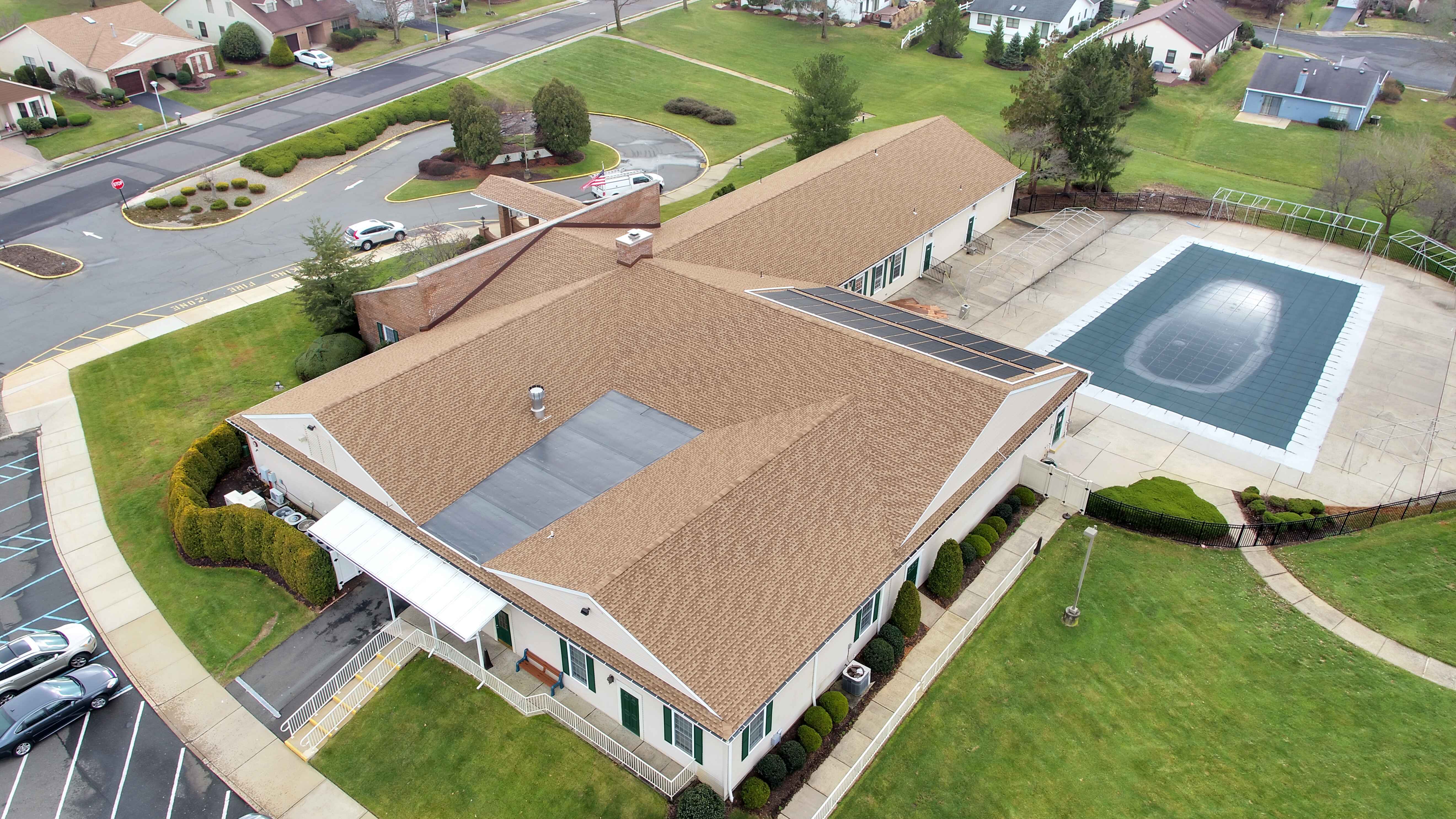
What affects the cost of winter roof repairs in NJ?
Every roof is different, so pricing depends on what we find. The main factors are:
- Type of damage: shingles, flashing, gutters, roof deck or ventilation
- Hidden water: whether water has reached the deck, insulation or framing
- Roof size, pitch and height: how much work there is and how safely it can be reached
- Materials: matching existing shingles or upgrading during replacement
- Timing: repairs caught before winter are usually simpler than repairs after a leak
An on-site inspection is the only way to price your roof accurately.
6 questions to ask a roofer before winter
- Are you licensed and insured in New Jersey?
- Will you check flashing, ventilation and the attic, or only the shingles?
- Will you show me photos of what you find?
- What do you recommend for ice dam protection on my roof?
- Do you offer emergency tarping if a storm damages my roof?
- What is included in your estimate, and what is excluded?
Winter roof prep FAQs
How do I know if I have an ice dam?
Look for a thick ridge of ice along the roof edge or in the gutters, large icicles, and water stains on ceilings or walls near the outside of the house. If water comes in during a thaw, an ice dam is a likely cause.
Should I remove snow from my roof?
You can use a long-handled roof rake from the ground to pull snow off the lower few feet of the roof, which leaves less snow to feed ice dams. Do not climb onto a snowy or icy roof. Call a professional for anything you can't reach safely from the ground.
Can roofs be repaired in winter in New Jersey?
Many roof repairs can be done on dry, milder winter days, and emergency repairs such as tarping can be done right after a storm. Full replacements depend on temperature and weather, which is why November and early December are a good time to schedule.
What causes most winter roof leaks at the Jersey Shore?
Wind-damaged shingles, loose or failing flashing, and ice dams are the most common causes. Nor'easters push rain sideways into small gaps, and those leaks often show up as ceiling stains far from where the water got in.
Does J.A.Y. Construction offer roof inspections in my town?
Yes. J.A.Y. Construction is headquartered in Toms River and serves homeowners throughout Ocean County and Monmouth County, NJ. We offer free, no-obligation estimates.
Get your roof winter-ready with J.A.Y. Construction
J.A.Y. Construction has served New Jersey homeowners from our Toms River headquarters since 2003. As a GAF Certified Weather Stopper Roofing Contractor, licensed and insured in New Jersey, we handle roof repair, roof replacement, storm remediation and emergency tarping across Ocean and Monmouth County.
Ready to schedule? Call 732-736-0660 or request a free roof inspection. To help us prepare, send:
- Your town
- What you noticed and where
- A few photos, if you have them
- The best time to reach you
J.A.Y. Construction LLC
444 Commons Way, Building D, Toms River, NJ 08755
732-736-0660