November Storm-Prep Checklist for Jersey Shore Homes: Roof, Gutters & Siding

Before winter storms reach the Jersey Shore, walk your home's exterior and check five zones: roof shingles and flashing, gutters and downspouts, siding and trim, window and door seals, and deck or porch connections. Fixing small openings in November keeps wind-driven rain, ice, and salt air from turning into costly winter repairs.
Want a second set of eyes before winter? Call 732-736-0660 or request a pre-winter exterior consultation.
Key takeaways for storm-prepping your Jersey Shore home
- Wind-driven rain is the real threat: nor'easters push water sideways into small gaps in roofs, siding, and trim.
- Timing matters: clear gutters after the last leaves fall so they flow when freezing weather arrives.
- Small fixes now: lifted shingles, loose flashing, and cracked caulk are easier to repair in November's milder weather.
- Salt air adds wear: fasteners, flashing, and trim age faster on Shore homes.
- Local since 2003: J.A.Y. Construction has served New Jersey homeowners from its Toms River headquarters since 2003.
Choosing an exterior contractor in Toms River, NJ before storm season
On the Jersey Shore, the biggest threat to your home in winter usually isn't snow. It's wind-driven rain from nor'easters, pushed sideways into gaps you'd never notice on a calm day.
November gives you a window. The weather is still mild enough for most exterior repairs, and the worst storms are still ahead. A one-hour walk around your house now can save you from a ceiling stain in February.

As an exterior contractor in Toms River, NJ, J.A.Y. Construction sees the same pattern every winter: small problems that were easy to fix in the fall become bigger repairs after water gets inside.
Why a November exterior check protects your home
Water rarely shows up where it gets in. A loose piece of flashing at the chimney can stain a ceiling several feet away, and a cracked trim joint can let water behind siding for months before anyone notices.
Use this table as you walk your property. Take photos of anything that looks off so you can compare after the next storm.
| Zone | What to look for | Why it matters before winter |
|---|---|---|
| Roof | Lifted, cracked, or missing shingles; loose flashing at chimneys, walls, and vents | Wind gets under loose shingles; flashing gaps let water run behind walls |
| Gutters and downspouts | Clogs, sagging runs, leaking seams, downspouts that empty at the foundation | Overflow soaks fascia and foundations; frozen clogs pull gutters loose |
| Siding and trim | Cracked or loose panels, soft or peeling trim, open gaps at corners | Wind-driven rain gets behind siding; freeze-thaw spreads rot |
| Windows and doors | Cracked caulk, worn weatherstripping, drafts on windy days | Air and water leaks raise heating bills and damage framing |
| Decks, porches, and railings | Soft boards, wobbly railings, rusted connectors at the house | Ice makes loose boards dangerous; coastal air corrodes hardware |
What to look for in each exterior zone before winter storms.
Not every crack means a big repair. The goal is to find the small openings now, while they are still small.
What Monmouth and Ocean County homeowners can check themselves
Plenty of storm prep is homeowner-friendly. Look at your roof from the ground with binoculars, check caulk and weatherstripping, push on deck railings, and make sure downspouts carry water several feet from your foundation.
Some of it isn't. Water stains on ceilings, loose flashing, anything above the first floor, and soft trim or deck framing are all signs it's time to call a professional.
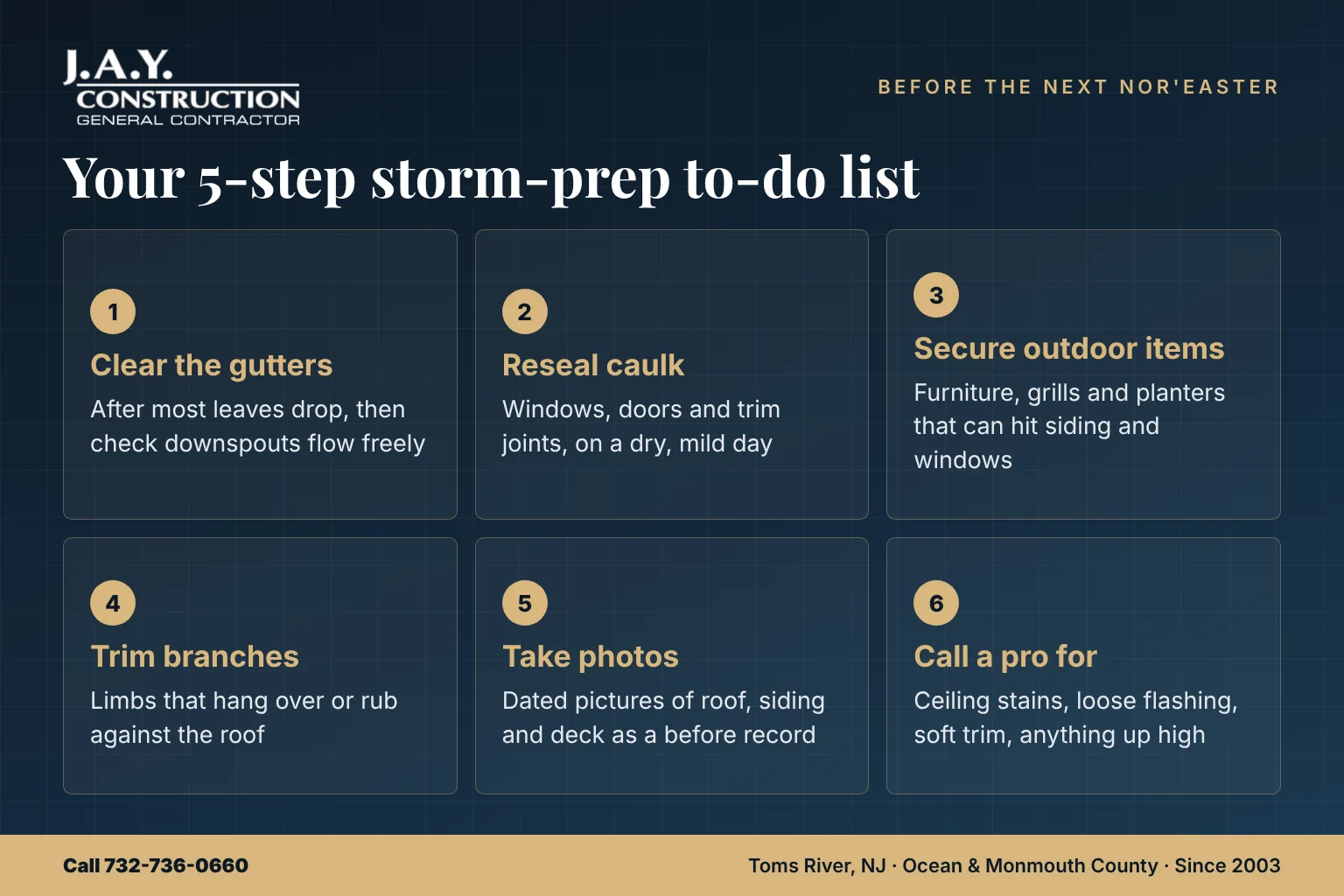
Before the next nor'easter: the storm-prep checklist
Work through these on a dry, mild day this month:
- Gutters: clear them after most leaves have dropped, then check that downspouts flow freely.
- Caulk and seals: reseal cracked caulk at windows, doors, and trim joints.
- Outdoor items: secure or store furniture, grills, and planters that can blow into siding and windows.
- Branches: trim limbs that hang over or rub against the roof.
- Photos: take dated pictures of your roof, siding, and deck so you have a before record.
Found something that looks off? Send us a photo and your town, and we'll help you sort out next steps. Request a pre-winter exterior consultation or call 732-736-0660.
What affects the cost of exterior storm repairs in NJ?
Every home is different, so pricing depends on what we find. The main factors are:
- Type of damage: roofing, flashing, siding, trim, gutters, or deck parts.
- Hidden water: how far water has traveled behind the surface.
- Materials: replacement pieces and how well they match existing ones.
- Height and access: roof pitch, height, and how safely the area can be reached.
- Permits: whether the work requires permits or inspections.
- Timing: problems caught early are usually simpler than repairs after a leak.
A small flashing repair and a section of rotted trim are very different jobs. An on-site look is the only way to price your project accurately.
7 questions to ask any exterior contractor at the Jersey Shore
Save or screenshot this list before your next contractor conversation.
- How long have you worked on homes in Ocean County and Monmouth County?
- Do you inspect flashing and trim, or only the area I called about?
- How do you find out whether water has gotten behind the siding or roof?
- What materials do you recommend for salt air and coastal wind?
- Will you show me photos of what you find?
- Who handles permits and inspections if they are needed?
- What is included in your estimate, and what is excluded?
Good answers show you a contractor who looks past the obvious spot and explains what they find.
Storm-prep FAQs
When should I clean my gutters in Toms River?
For most Ocean County homes, late November or early December works best, after most leaves have dropped. If tall trees surround your house, plan a mid-fall cleaning plus a final one so water flows freely when freezing weather arrives.
What causes most winter leaks in Jersey Shore homes?
Flashing is a frequent culprit. That's the metal where your roof meets chimneys, walls, skylights, and vents. Nor'easter winds push rain sideways into small gaps that stay hidden in calm weather, then show up as ceiling stains.
How much do storm-prep repairs cost in Ocean County?
Cost depends on what is damaged, how far water has spread, the materials you choose, and how hard the area is to reach. Small fixes caught early usually cost far less than repairs after water gets inside. An on-site visit is needed for accurate pricing.
Can I get an estimate from photos?
Photos are a great start. Send your town, what you noticed, and a few pictures so our first conversation is about your home. For an accurate estimate, we still need to see roofs, flashing, and anything that may hide water damage.
Does J.A.Y. Construction serve Ocean and Monmouth Counties?
Yes. J.A.Y. Construction is headquartered in Toms River and serves homeowners throughout Ocean County and Monmouth County, NJ, including Jersey Shore communities. We have served New Jersey homeowners since 2003.
Plan your storm prep with J.A.Y. Construction
J.A.Y. Construction is headquartered in Toms River and has served New Jersey homeowners since 2003. We look at your roof, siding, trim, and deck as one exterior system, so small problems get found before winter does.
Ready to start? Call 732-736-0660 or request a consultation. To help start the discussion, send:
- Your town
- What you noticed and where (roof, gutters, siding, deck)
- A few photos, if you have them
- The best time to reach you